[toc]
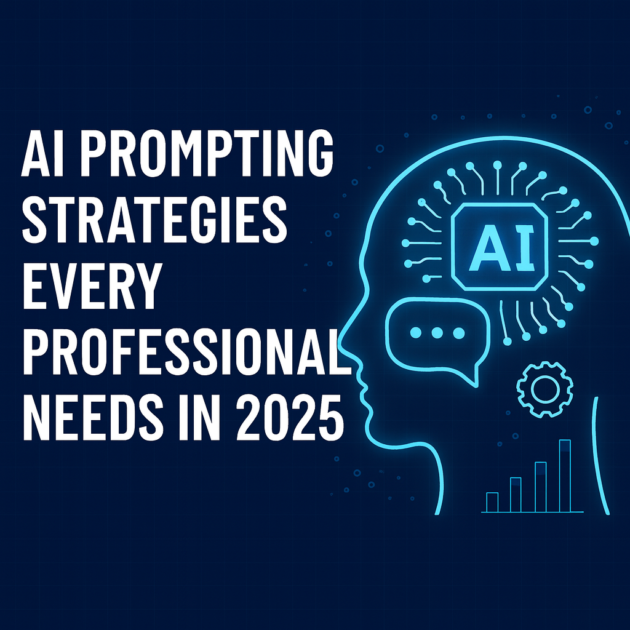
AI Prompting Strategies help you work faster, write better, and solve problems with clarity. Learn the top techniques every professional needs in 2025.
What are AI Prompting Strategies in 2025?
AI prompting strategies in 2025 are structured methods used to guide large language models with clarity, context, constraints, and intent, enabling them to produce accurate, reliable, and task-specific outputs across text, image, and multimodal use cases.
In 2025, effective AI prompting focuses on clarity of intent, contextual grounding, step-by-step reasoning, and outcome validation. These strategies help users reduce hallucinations, improve consistency, and align AI outputs with real-world goals across business, creative, and technical domains.
Why AI Prompting Strategies Matter in 2025
You’re working in a world where AI isn’t a future concept. It’s part of your daily workflow. Whether you write, code, research, design, or manage teams, knowing how to guide AI clearly gives you a measurable advantage. AI Prompting Strategies become the bridge between what you think and what AI delivers.
When you master prompting, you:
- Save time on repetitive tasks
- Improve clarity in writing and communication
- Enhance creativity and brainstorming
- Get higher-quality outputs with fewer edits
- Make better decisions backed by structured analysis
In 2025, professionals who understand AI guidance will outperform those who treat AI like a guessing game.
How to Apply AI Prompting Strategies Step by Step
- Define the exact goal and expected output format.
- Provide necessary context, constraints, and assumptions.
- Break complex requests into ordered steps.
- Specify tone, depth, and audience level.
- Validate and refine prompts based on output quality.
Core Principles of Effective AI Prompting
Before diving into the specific AI Prompting Strategies, it helps to know the foundation. These simple rules help you get consistent results no matter the tool you’re using.
Be Specific, Not Vague
AI follows the details you provide. Being specific doesn’t mean long prompts; it means giving the right context.
State the Output Format
If you need an email, say email. If you need bullet points, request bullet points. Structure speeds up clarity.
Give a Role to the AI
Instructions like “act as a UX designer” or “act as a senior strategist” shape the tone and expertise of the output.
Provide Examples
AI learns quickly from patterns. A short example guides tone, structure, and purpose.
- Good Prompt:
- Write a friendly onboarding email using a warm tone. Example style: “Welcome aboard! We’re excited to help you get started.”
Top AI Prompting Strategies for Professionals
Now, let’s explore the most practical and high-impact AI Prompting Strategies you can use right away. These work across roles and industries.
1. The Role-and-Goal Method
This strategy sets a role and a clear objective.
Act as a project manager. Summarize this report into five bullet points for a leadership update.
Why it works: The role cues expertise, and the goal ensures precision.
2. The Problem-Solution Prompt
State the issue and ask for a structured solution.
Here’s the problem: our newsletter engagement dropped 25%. Give three possible causes and solutions.
3. The Step-by-Step Builder
This prompt helps you break down complex tasks into manageable stages.
Guide me through creating a weekly content strategy in five steps.
4. The Tone Shaping Prompt
If you want writing that matches your brand or personality, you need tone control.
- Formal
- Friendly
- Persuasive
- Playful
Rewrite this paragraph in a confident but approachable tone.
5. Iteration Prompts
You can refine outputs quickly by requesting versions, contrasts, or alternatives.
Give me three variations of this tagline, each with a different style: formal, fun, and bold.
Iteration is one of the strongest AI Prompting Strategies because it helps you explore ideas fast.
As AI search and generative engines evolve in 2025, prompting strategies have shifted toward precision, transparency, and answer-ready structures. These changes align with how AI systems summarize, quote, and surface content in modern search experiences.
AI prompting strategies in 2025 help users get better results by clearly defining intent, context, and steps. Well-structured prompts reduce errors and make AI outputs more reliable for real-world tasks.
Advanced Prompt Techniques to Level Up Your Work
Once you’re comfortable with the basics, you can take your AI usage to a professional level using these deeper strategies.
Chain-of-Thought Prompting
This encourages AI to think through steps logically before answering. It’s especially useful for reasoning-heavy tasks.
Think step by step and explain your reasoning as you compare these marketing strategies.
Few-Shot Prompting
You show the AI a couple of examples, and it imitates the format and tone with high accuracy.
Example 1: Question: What is cloud storage? Answer: It's a digital service that lets you store files online.
Example 2:
Question: What is a VPN?
Answer:
Provide the next answer in the same style.
Context-Rich Prompting
Adding brief background details dramatically improves results.
For instance:
Write a 150-word summary for a beginner audience learning about data analytics for the first time.
Common Prompting Mistakes to Avoid
Even strong AI Prompting Strategies fail when small mistakes creep in. Here are the big ones to watch for.
Being Too Broad
AI needs direction. Asking “write something good” doesn’t help.
Ignoring Review and Iteration
Don’t accept the first draft. AI improves through guidance.
Not Setting Boundaries
If you don’t limit length, tone, or scope, you get bloated outputs.
Overloading the Prompt
More text doesn’t mean more clarity. Keep instructions clean and purposeful.
When to Use Templates vs. Custom Prompts
Templates save time for routine tasks, but custom prompts shine when nuance matters.
Choose Templates When:
- You write similar emails weekly
- You produce quick social posts
- You summarize reports regularly
Choose Custom Prompts When:
- You need original analysis
- You want to develop a unique voice
- You’re handling sensitive or strategic tasks
Using both wisely is one of the most effective AI Prompting Strategies for 2025.
Practical Use Cases Across Professions
Here’s how AI Prompting Strategies transform everyday work across different fields.
Marketing Professionals
- Write high-converting email copy
- Brainstorm ad variations
- Research competitor insights
Writers and Creatives
- Generate story ideas
- Refine tone and clarity
- Create outlines quickly
Project Managers
- Summarize meetings
- Draft task breakdowns
- Build clear status updates
Developers
- Debug code explanations
- Create documentation
- Plan architecture steps
Educators
- Build lesson plans
- Explain concepts in simpler ways
- Create engaging examples
You can adapt all these examples by combining them with the strategies earlier in the article.
External sources you may find helpful:
Final Thoughts
As you explore more AI Prompting Strategies, you’ll notice how much easier work becomes when you communicate clearly with AI. The real power isn’t in long or complex prompts; it’s in intentional instructions, structured thinking, and continued refinement.
Use these strategies to speed up your workflow, boost creativity, and make your professional life smoother in 2025 and beyond.
Related Guides
n
n
Frequently Asked Questions
Why are AI prompting strategies important in 2025?
Do AI prompting strategies work for all AI tools?
What is the biggest mistake people make with AI prompts?
How do AI prompting strategies affect AI search results?
Are AI prompting strategies only useful for experts?
What are AI Prompting Strategies?
Do I need technical skills to use prompting well?
How often should I refine a prompt?
Almost every task benefits from at least one round of refinement.
Are prompting templates useful?
They’re great for repetitive tasks, but custom prompts offer better depth.
Will prompting still matter as AI improves?
Yes. Clear communication always improves results, no matter how advanced the tool.