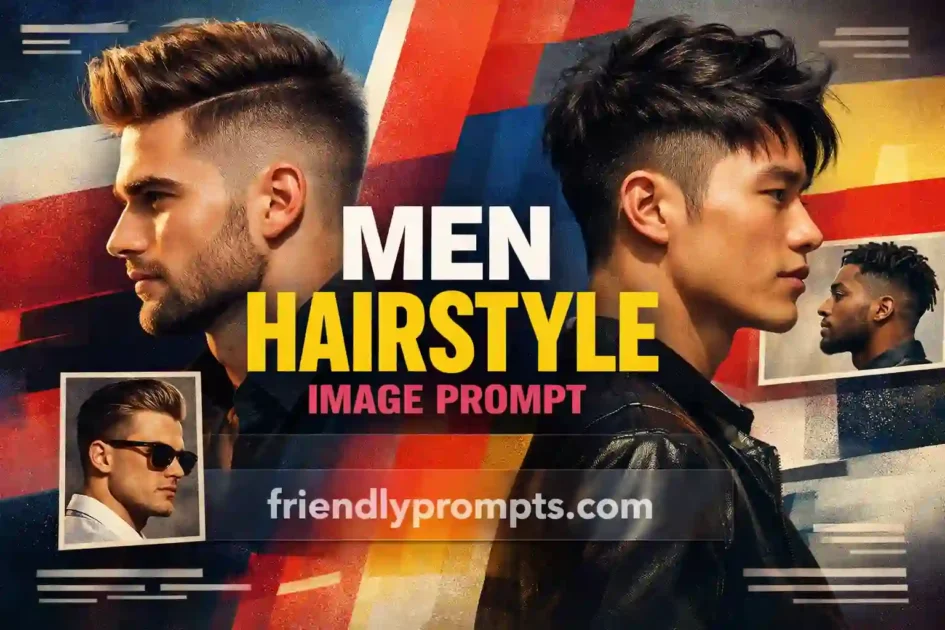
Finding a haircut idea online is easy. Getting an AI prompt that gives a realistic, useful hairstyle suggestion is much harder. Most people type something too broad, get a random haircut image, and then leave more confused than before.
This guide brings your men’s hairstyle content into one better page. It covers realistic hairstyle prompts for different face shapes, hair textures, beard combinations, and style goals. Whether you want a clean office haircut, a modern fade, a wavy medium-length style, or a more rugged look, these prompts will help you get better output with less trial and error.
What makes a good hairstyle prompt?
A good hairstyle prompt does not just mention a haircut name. It should describe the face shape, hair texture, age range, beard style if any, and the mood or setting. For example, a prompt for a college student, a corporate professional, and a wedding-groom look should not sound the same.
How to describe your face shape and hair texture?
Start with what the AI actually needs to know: oval face, round face, square jaw, curly hair, thick straight hair, receding hairline, salt-and-pepper hair, or short beard. These details improve realism much more than adding stylish adjectives.
Why more men are using AI hairstyle images before getting a haircut
Most haircut mistakes happen before the scissors touch your hair. They happen when the idea in your mind does not match what the barber understood. AI hairstyle images help reduce that mismatch by turning your preference into a visible reference.
This is especially useful when you want to answer practical questions such as:
- Will this haircut suit my face shape?
- Will this style look too high-maintenance for my routine?
- Will this haircut work with my beard?
- Will this look realistic on thick, dark, or slightly wavy hair?
- Is this trend actually wearable in daily life?
A hairstyle image prompt does not replace a good barber. It helps you arrive with a better brief.
ChatGPT vs Gemini for hairstyle image prompts
Both tools can be useful, but they help in different ways.
Use ChatGPT when you want help refining the wording of the prompt, choosing the right haircut direction, or turning a vague idea into a more detailed visual brief.
Use Gemini when you want to work directly inside an image-generation or image-editing workflow, especially when you are uploading photos and asking the model to create or edit a visual output.
A simple workflow that works well for many people is this: use ChatGPT to refine the haircut logic, then use Gemini or another image tool to generate the visual reference.
What makes a hairstyle image prompt actually work?
The strongest hairstyle prompts usually include six practical elements:
- Hairstyle direction: textured crop, taper fade, soft mullet, layered flow, side part, and so on
- Hair type: straight, wavy, curly, thick, coarse, thinning, dense
- Face shape: oval, round, square, long, heart-shaped
- Realism controls: natural hairline, realistic density, no beauty filters, no cartoon effects
- Lighting and camera guidance: daylight, studio, barber-shop reference, front angle, side angle
- Use case: office-safe, low-maintenance, youthful, beard-friendly, summer-friendly, barber consultation
In practice, prompts fail when they rely on vague words like “handsome,” “cool,” or “stylish” without technical detail. Those words are too subjective. Better prompts describe shape, texture, density, finish, and realism.
Trending men hairstyles right now that work well with AI prompts
Some haircuts are easier to generate well than others. The most AI-friendly styles usually have a clear structure, natural texture, and wearable shape. Right now, softer tapers, burst fades, textured crops, curly-top variations, and softer mullet-inspired cuts are especially useful for prompt-based hairstyle generation because they give the model enough shape to follow without forcing an overly artificial result.
For practical everyday use, the strongest categories are:
- Textured crop with taper or low fade
- Soft taper with messy top
- Curly top with controlled sides
- Modern side part with natural volume
- Medium layered flow
- Soft mullet or baby mullet variation
- Burst fade with texture
The key is not chasing the loudest trend. It is adapting a current shape into something that fits your real features and routine.
How hairstyle image prompts help before visiting a barber
A good barber can work with words, but a clear visual still helps. When you show a realistic hairstyle reference generated around your actual hair type and face shape, the consultation gets easier.
- You reduce guesswork
- You show proportion more clearly
- You can compare two or three safe options before deciding
- You are less likely to ask for a cut that looks good online but does not suit you in person
This is one of the best uses of AI hairstyle prompts: not chasing fantasy images, but creating cleaner reference material for real grooming decisions.
Common mistakes men make with hairstyle image prompts
Even strong tools give weak outputs when the prompt is unclear. These are the mistakes that usually ruin the result:
- Using vague words instead of haircut structure
- Ignoring natural hairline, crown, or recession
- Asking for unrealistic density or volume
- Forgetting to mention face shape
- Mixing too many hairstyles in one request
- Asking for “cinematic” or “ultra-glam” when the goal is barber realism
- Not specifying Indian hair texture, darker density, or natural skin tone when that matters
If you want better results, be honest in the prompt. Real hair behaves like real hair. The more realistic the brief, the more useful the final image becomes.
What you will get below
In the next section, you will get 21 trending men hairstyle image prompts written for realistic use. They are designed for:
- AI hairstyle image generation
- Barber-ready reference visuals
- Indian hair texture and darker natural tones
- Current, wearable men’s haircut directions
- Natural-looking outputs instead of over-styled fantasy images
You can copy these prompts as they are, or customize them with your own face shape, hairline, beard style, or maintenance preference.
21 trending men hairstyle image prompts
1. Textured Crop with Low Taper
Create a realistic men’s hairstyle image featuring a textured crop with a low taper. Hair should look thick, dark, and naturally dense, suitable for Indian hair texture. Keep the top slightly choppy with soft movement and the sides neat but not aggressively faded. Face shape should be oval. Natural brown skin tone, realistic hairline, soft daylight lighting, no beauty filter, no cartoon styling, no exaggerated shine. Output should look like a real haircut reference photo that could be shown to a barber.2. Messy Top with Taper Fade
Generate a photorealistic men’s haircut image with a messy textured top and a clean taper fade. Hair should have natural movement, medium-to-thick density, and a wearable everyday finish. Subject should look Indian, mid-20s, with realistic facial features and natural skin tone. Neutral background, clean barber-style lighting, no dramatic effects, no stylized filters. Final output should look practical and modern.3. Curly Top with Controlled Sides
Create a realistic hairstyle image showing tight natural curls on top with controlled clean sides. Hair texture should reflect real Indian curly hair rather than loose glossy waves. Face shape slightly round. Keep the crown and hairline natural. Use soft indoor lighting like a high-quality barber consultation photo. Avoid over-defined curls, over-sharpening, or synthetic gloss.4. Modern Side Part for Office Wear
Generate a realistic men’s hairstyle image with a modern side part that looks professional and office-safe. Hair should be straight to slightly wavy, medium thickness, neatly directed with natural volume and no stiff helmet shape. Subject should look Indian, early 30s, clean-shaven, with realistic skin texture. Neutral background, balanced lighting, no fashion filter, no over-styling. Final image should feel polished and believable.5. Medium-Length Layered Flow
Create a photorealistic hairstyle image of a medium-length layered men’s haircut with natural movement. Hair should be thick, slightly wavy, healthy-looking, and shaped to fall naturally around the face. Indian facial features, oval face shape, realistic dark hair, natural outdoor lighting. Keep the image soft, clean, and wearable, with no cinematic effects or exaggerated volume.6. Low-Maintenance Short Cut
Generate a realistic image of a low-maintenance short haircut for men. Hair should be thick, straight, and easy to manage, with simple clean edges and no extreme skin fade. Subject should look Indian with natural brown skin tone and realistic hair density. Neutral background, practical barber-shop lighting, no glamour retouching, no unrealistic sharpness. Output should feel everyday and useful.7. Beard and Hairstyle Balanced Look
Create a realistic grooming reference image of an Indian man with a balanced hairstyle and beard combination. Haircut should include a medium taper or fade with a textured top that complements the beard instead of overpowering it. Preserve realistic skin tone, beard density, and natural facial proportions. Use clean natural lighting and avoid filters. Final result should look like a polished but believable barber reference.8. Receding Hairline Friendly Style
Generate a realistic hairstyle image for a man with a slightly receding hairline. Style the hair forward with controlled texture in a natural way without pretending the temples are completely full. Medium thickness hair, realistic Indian features, soft lighting, no fake density, no comb-over exaggeration, no artificial hairline correction. Output should look honest, flattering, and practical.9. Youthful Casual Look
Create a casual youthful men’s hairstyle image with a textured top and natural-looking sides. Hair density should be medium, texture slightly messy, and overall shape easygoing but well cut. Subject should look Indian and relaxed, with realistic skin tone and balanced proportions. Use soft daylight and natural color tones. Avoid glossy styling or fashion-magazine exaggeration.10. Gym-Friendly Short Hairstyle
Generate a realistic men’s hairstyle image suitable for an active lifestyle and gym routine. Hair should be short, structured, clean, and easy to manage with sweat and movement. Thick Indian hair texture, realistic natural hairline, simple background, practical lighting, no wet-look gel finish, no dramatic fade. Final output should look functional and sharp.11. Clean Fade with Natural Volume
Create a high-quality men’s haircut image featuring a clean fade with natural volume on top. Hair should be thick, dark, and shaped with realistic texture rather than stiff styling. Indian facial features, natural skin tone, controlled studio lighting, no beauty smoothing, no stylized contrast. Output should look like a realistic premium barber reference photo.12. Summer-Friendly Lightweight Cut
Create a realistic summer men’s hairstyle image with short breathable sides and a lightweight textured top. Hair should look comfortable for heat and humidity while still appearing stylish and wearable. Subject should have Indian features, darker natural hair, realistic skin tone, and natural daylight lighting. Avoid artificial shine, heavy product look, or unrealistic density.13. Winter-Friendly Medium Cut
Generate a realistic winter hairstyle image with medium-length hair, controlled layering, and enough fullness to feel seasonally balanced. Hair should be thick and natural with a slightly relaxed finish. Subject should look Indian with realistic proportions and warm indoor lighting. Keep the image grounded and wearable. No cinematic grading, no over-stylized fluff.14. Classic Gentleman Style
Generate a realistic classic men’s hairstyle image with timeless grooming appeal. Hair should be neatly styled with a subtle side direction, soft taper, and natural volume. Subject should look mature, confident, and Indian, with realistic dark hair and natural skin tone. Neutral background, clean lighting, no trend-heavy details, no over-groomed shine. Output should feel elegant and practical.15. Street-Style Textured Fringe
Create a realistic street-style men’s haircut image with a textured fringe and relaxed shape. Hair should have movement, medium density, and a slightly edgy but wearable finish. Subject should look Indian, younger adult, with realistic facial proportions and natural color tone. Use outdoor lighting and a clean urban mood without turning the image into fashion-editorial fantasy. Keep it real and barber-usable.16. Thick Hair Control Cut
Generate a hairstyle image designed for very thick hair that needs shape and control. Reduce visible bulk while preserving healthy density and realistic texture. Hair should look dark, heavy, and natural, suitable for Indian hair type. Use honest lighting and realistic scalp coverage. Avoid making the hair look overly thinned or unnaturally flat. Final output should feel practical and refined.17. Wavy Hair with Natural Movement
Create a realistic men’s hairstyle image for naturally wavy hair. The haircut should enhance movement without turning frizzy or too styled. Keep the top medium length with softly controlled sides. Subject should look Indian with natural facial features, realistic skin tone, and a believable hairline. Use soft daylight or barbershop lighting. No cinematic effects, no glossy curls, no fake texture enhancement.18. Soft Mullet or Baby Mullet
Generate a realistic men’s haircut image featuring a soft mullet, also known as a baby mullet. Keep the shape subtle and wearable, with controlled length at the back, soft tapering around the sides, and natural texture on top. Subject should look Indian with thick dark hair and realistic facial proportions. Lighting should be clean and neutral. Avoid making the style too extreme, retro, or costume-like. Final image should feel current and wearable.19. Burst Fade with Texture
Create a photorealistic hairstyle image with a burst fade and textured top. Keep the fade clean around the ear area without making it too harsh, and preserve enough top texture for a modern everyday look. Hair should be thick, dark, and realistic. Subject should look Indian with a natural skin tone and believable hairline. Use sharp but natural lighting. No cartoon finish, no excessive contrast, no exaggerated styling.20. Barber Consultation Front and Side View Prompt
Generate a realistic barber consultation hairstyle reference image showing the same man from front angle and slight side angle. Haircut should be modern, clean, and practical, with visible shape details that help a barber understand the cut clearly. Subject should look Indian with thick dark hair, realistic hairline, and natural skin tone. Lighting should be neutral and clear, like a professional haircut reference photo. No artistic effects or unnecessary background styling.21. Ultra-Realistic Hairstyle Try-On from Uploaded Photo
Use the uploaded photo as the main identity reference. Preserve the person’s face shape, facial identity, natural hairline, skin tone, and overall proportions accurately. Apply a realistic modern men’s hairstyle that suits thick dark Indian hair and looks wearable in daily life. Keep the result photorealistic, clean, and barber-friendly. Match lighting and angle naturally. Avoid face changes, unrealistic hair density, beauty filters, cartoon effects, and artificial smoothing. Final output should look like a real hairstyle try-on photo.How to customize these prompts for better results
You do not have to use every prompt exactly as written. For better results, customize four details before generating the image:
- Your face shape such as oval, round, square, or long
- Your hair type such as thick, wavy, curly, straight, thinning, or coarse
- Your lifestyle such as office work, student life, creator lifestyle, gym routine, or low-maintenance preference
- Your realism level such as barber reference, social media ready, or hairstyle try-on
That one step usually makes the output much more personal and much more useful.
Frequently Asked Questions
1. What is a trending men hairstyle image prompt?
It is a structured prompt used in an AI image tool to generate hairstyle visuals based on current haircut directions, hair type, realism, and personal features.
2. Can I use these prompts in both ChatGPT and Gemini?
Yes. You can use them as written prompts in either workflow, though the exact result will depend on the image model and how you refine the request.
3. Are these prompts suitable for Indian men?
Yes. These prompts are written with Indian hair texture, darker hair density, natural brown skin tone, and practical local styling preferences in mind.
4. Do I need to upload my own photo?
No. Many of these prompts work as reference-style generation prompts without a personal photo. If you want a closer hairstyle try-on result, uploading your own photo helps.
5. Can I show these AI hairstyle images to my barber?
Yes. That is one of the best uses of them. A realistic AI hairstyle image is often easier for a barber to interpret than a vague description.
6. Why do AI hairstyle images sometimes look fake?
The most common reasons are vague prompts, unrealistic density requests, missing lighting instructions, and no realism constraints.
7. Which hairstyles usually generate the cleanest AI results?
Textured crops, softer tapers, side parts, curly tops, layered medium cuts, burst fades, and softer mullet variations usually perform well because they have clear shape without needing extreme styling.
8. Are AI hairstyle images better than celebrity reference photos?
They can be, especially when the AI image is built around your likely hair type, density, face shape, and maintenance level instead of someone else’s features.
9. Can beginners use these prompts easily?
Yes. You can copy one prompt, change a few personal details, and generate a better reference image without advanced prompt knowledge.
10. What is the best way to use this article?
Pick two or three prompts that fit your real lifestyle, generate the images, compare the results, and take the best one to your barber. That is usually much more useful than chasing twenty different haircut ideas at once.
Final thoughts
The best trending men hairstyle image prompt is not the one that sounds the most stylish. It is the one that creates a realistic haircut reference you can actually use. A good prompt should help you make a better grooming decision, not just generate a flashy image.
Start with one prompt that fits your real hair type and routine. Adjust the face shape, density, and haircut direction honestly. Then use the final image as a visual conversation tool, not just an AI experiment. That is where these prompts become genuinely valuable.